
Sports Team Studios | Existing Space
By David Frangioni | Frangioni Media | Header image: concept rendering for illustration.
Most teams already own the square footage for a content studio. The question is whether that space can be made quiet, powered and connected enough to produce at a professional level.
The Short Answer
Yes, stadium suites, unused offices, storage areas and training-facility rooms can often become production studios. Success depends on isolation from event and crowd noise, HVAC, power, ceiling height, network access and how talent and crews move through the building. Frangioni Media evaluates all of these before design starts and then delivers the conversion turnkey.
What to Evaluate First
- Noise and vibration. Game-day crowds, concerts, mechanical rooms and loading docks travel through structure. We measure before we design.
- HVAC. Building air systems are rarely quiet enough for recording. Dedicated low-noise systems are often required.
- Power and grounding. Clean, dedicated circuits prevent hum and protect equipment.
- Ceiling height and grid. Lighting and camera work need clearance. Low ceilings change what a room can do.
- Connectivity. Fiber to the broadcast core, the field and the edit bays lets one facility serve live and recorded work.
- Adjacency. Studios that are close to the locker room, practice field or press areas get used more because talent can get there in minutes.
What a Conversion Usually Involves
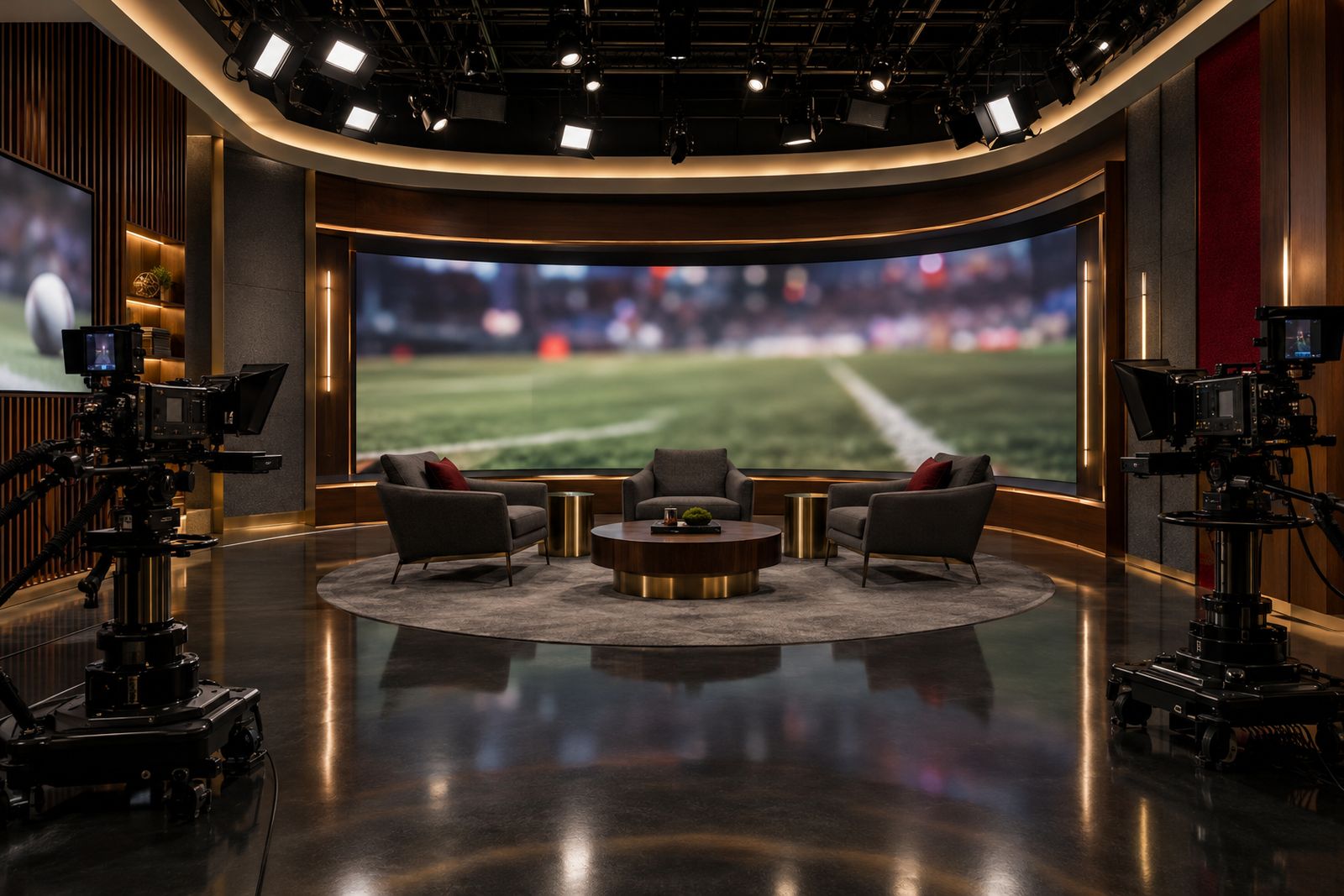
- Room-within-a-room isolation where event noise is a factor.
- Acoustic treatment tuned to each room’s purpose: stage, podcast, voice-over or mix.
- Dedicated HVAC, power and lighting control.
- Integrated cameras, audio, switching, shared storage and networking.
- Calibration and training so the team can produce from the first day.
Why One Lead Matters Here
Conversions surface surprises once walls open. When design, construction coordination and systems integration sit with one accountable lead, those surprises are solved in the plan instead of becoming change orders between vendors. See what drives the cost of a team studio, or read David Frangioni on what he looks for first in an existing stadium space.
Frequently Asked Questions
Can a stadium suite become a recording studio?
Often, yes, if it can be isolated from crowd and event noise and given quiet HVAC and clean power. A site evaluation answers this before any design money is spent.
Can a studio in a stadium be used on game days?
With proper isolation, yes. Rooms can be designed to keep producing pre-game, halftime and post-game content while the building is full.
Who handles a stadium studio conversion from start to finish?
Frangioni Media, led by David Frangioni, handles evaluation, design, systems integration, acoustics, calibration and training as one turnkey engagement.
One call. One accountable lead.
Find out what your space can become.
Tell us about the space you have. We will tell you what it can produce and the most cost-effective way to get there.