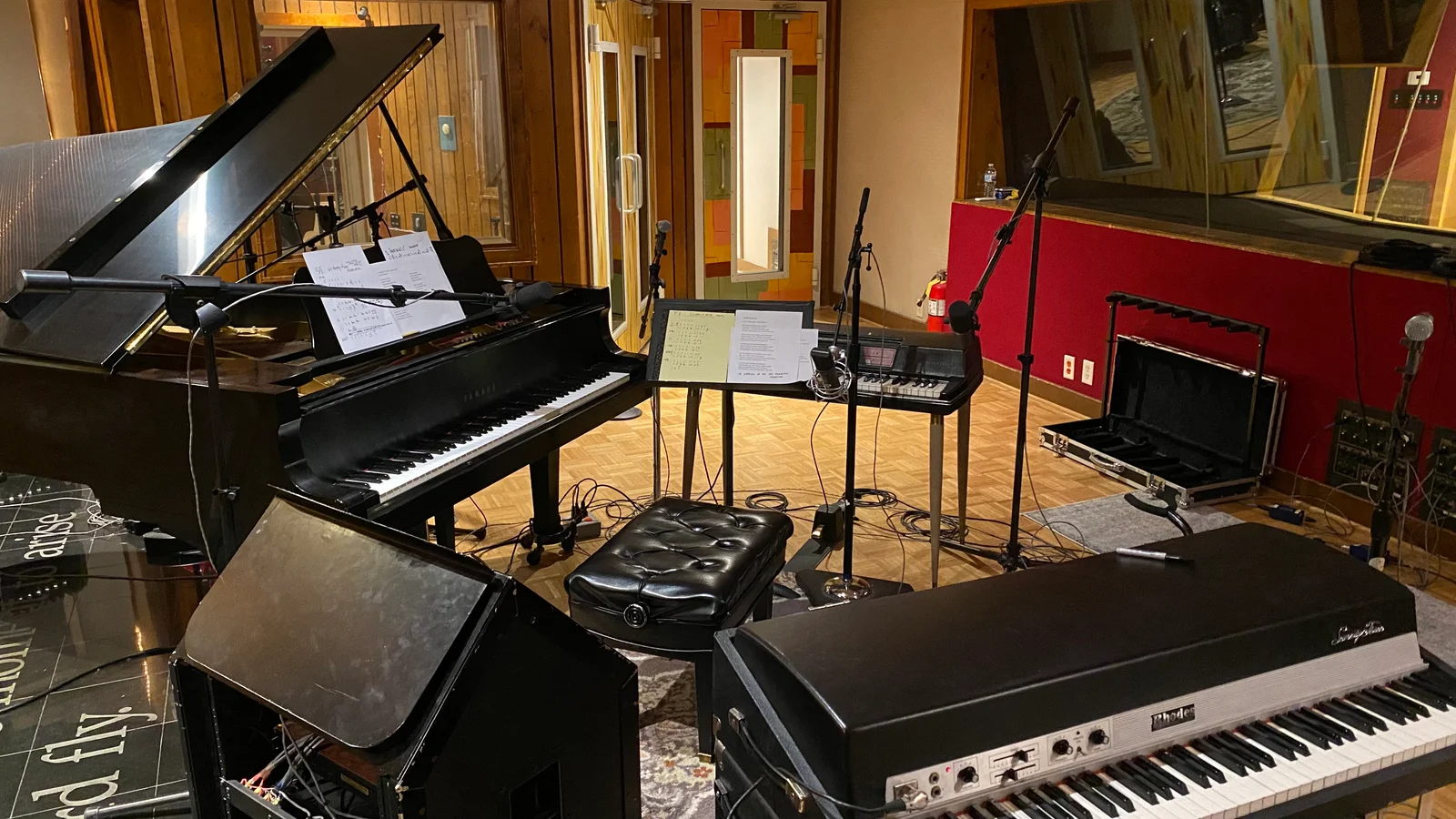



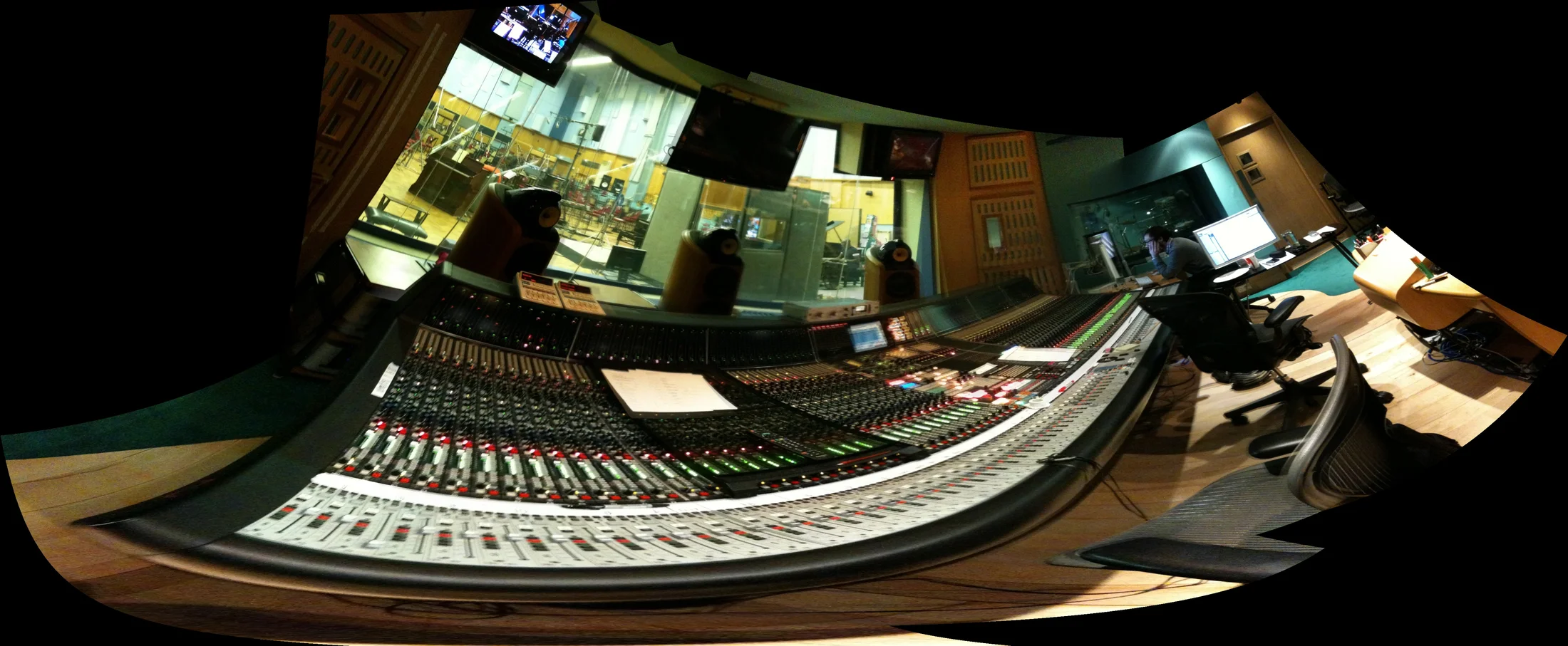
Abbey Road Studio Two is a recording studio in London, United Kingdom, opened in 1931 and closely associated with the Beatles and Pink Floyd. Abbey Road: Studio Two history This chapter explores its recording history, recognizable architecture and the relationship between the room and the people making music inside it.
Begin with the room. Before the equipment list and the celebrated names, look at the staircase, the floor, the height, and the distance between the musicians and the people recording them.
A studio can be approached as a collection of tools. For this book, a more interesting starting point is the relationship between the space and the creative work it makes possible.
Abbey Road Studio Two’s recording-room design
Studio Two opened in 1931 as one of Abbey Road’s original three studios; the studio’s own history describes early use by jazz and swing bands, smaller chamber ensembles, and later comedy performers. Abbey Road: studio history Its well-known staircase arrived in 1957, when the control room moved upstairs to make space for more equipment. Abbey Road: Studio Two
Those details offer a useful way into the photographs. Rather than treating the architecture as scenery, look for how it organizes the working day: where people gather, how they see one another, and where decisions are made.
The Beatles, Pink Floyd and Studio Two’s recording history
Abbey Road dates the Beatles’ first recording with George Martin at the studios to June 1962, and identifies the Beatles and Pink Floyd as central to Studio Two’s reputation. Abbey Road: recording history Its account also places later artists including Radiohead, Adele and Oasis within Studio Two’s continuing story. Abbey Road: later recordings
A familiar artist can be the invitation to explore a studio. The deeper question is how a workplace acquires meaning over time, and how each new group of musicians might approach a room already associated with so much music.
Acoustic details and isolation booths
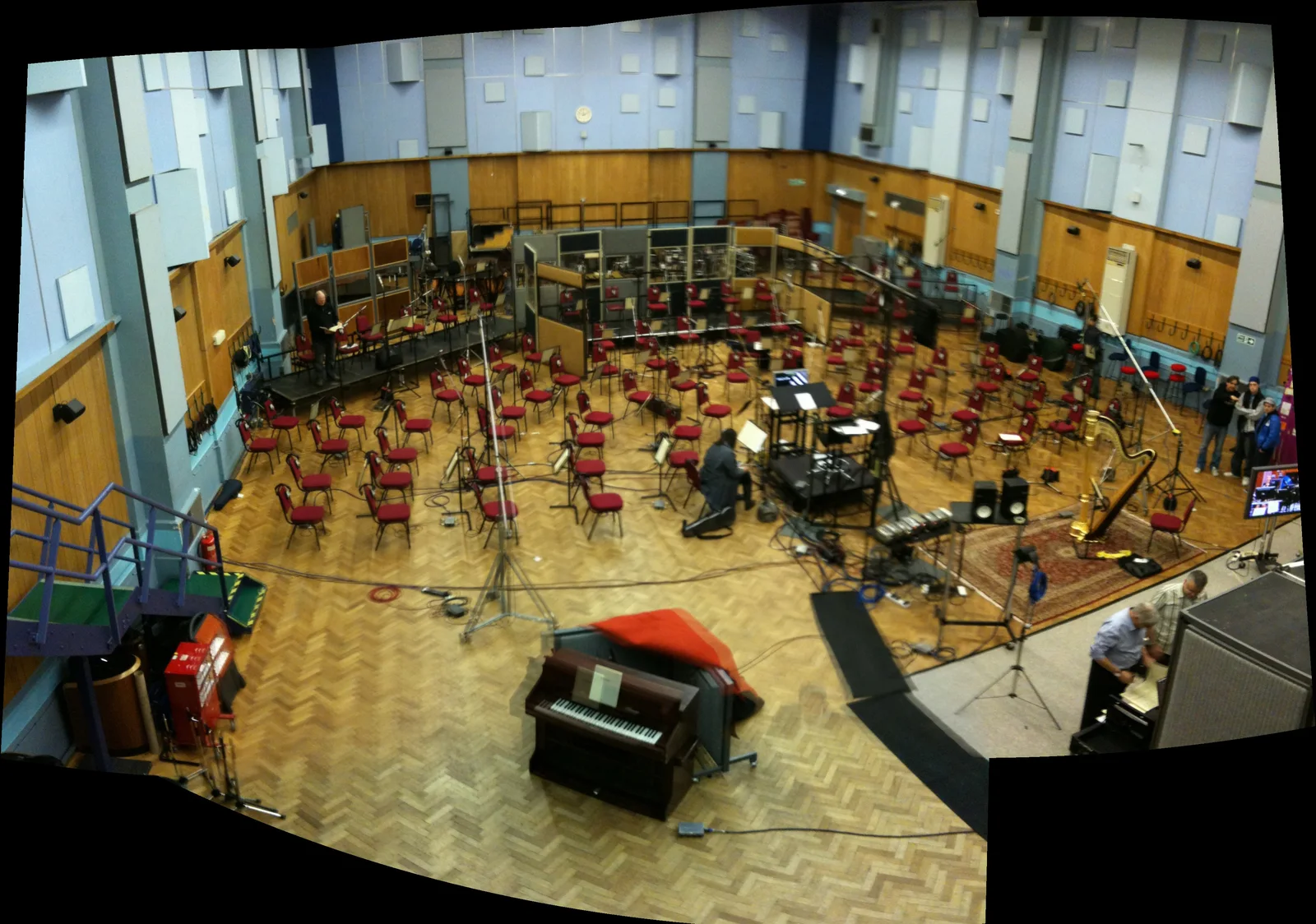
Abbey Road’s historical account singles out the herringbone floor, dovetail bricks, baffles and tall isolation screens among Studio Two’s recognizable features. Abbey Road: the room’s details In 2016, the studio added two isolation booths by repurposing existing spaces, including the original ground-floor control room and a former microphone store. Abbey Road: isolation booths
A room can retain a recognizable identity while the practical demands around it change. Here, the adaptation invites us to consider the balance between preserving a distinctive recording environment and making it useful for another generation of sessions.
My perspective on recording studio design
What I want to explore in this book is what makes a studio matter to the people creating inside it. The photographs invite us in, but the most valuable questions go beyond what a room looks like.
Where does the artist feel comfortable? How do the musicians and the recording team communicate? Which details help everyone stay connected to the performance? Those are the questions I want to bring to each studio we present.
The people give it meaning.
People, performance and recording space
Return to the two photographs and look at what each allows you to see. One centers the recording position; the other centers the performers sharing a space.
Keep both views in mind as the book grows. Every studio offers another way to think about the relationship between music, people and place.