

What the World’s Best Private Home Theaters Have in Common
The best private home theaters in the world share six things: one person responsible for the whole system, a room designed before the equipment is chosen, a picture and sound chain matched end to end, calibration at every seat, music performance equal to movies, and operation the owner never has to think about. I am David Frangioni, and this is the architecture I design to at Frangioni Media.
I have spent my career inside rooms where sound matters most, from Aerosmith’s studios to two studios for Ozzy Osbourne, and Frangioni Media’s projects include work for Elton John, Cher, The Rolling Stones and Aerosmith. What follows is the short list I use when a principal asks what separates a truly world-class private cinema from an expensive one.
1. One System Architect Owns the Whole Result
A great private theater involves an architect, an interior designer, a builder, an acoustician, a seating and interiors firm and several equipment makers. Each can do excellent work and the room can still disappoint, because nobody owned how the parts behave together. The rooms I admire most have one person accountable for the entire signal chain and the experience at the seat, working on the owner’s behalf from the first drawing to the final calibration.
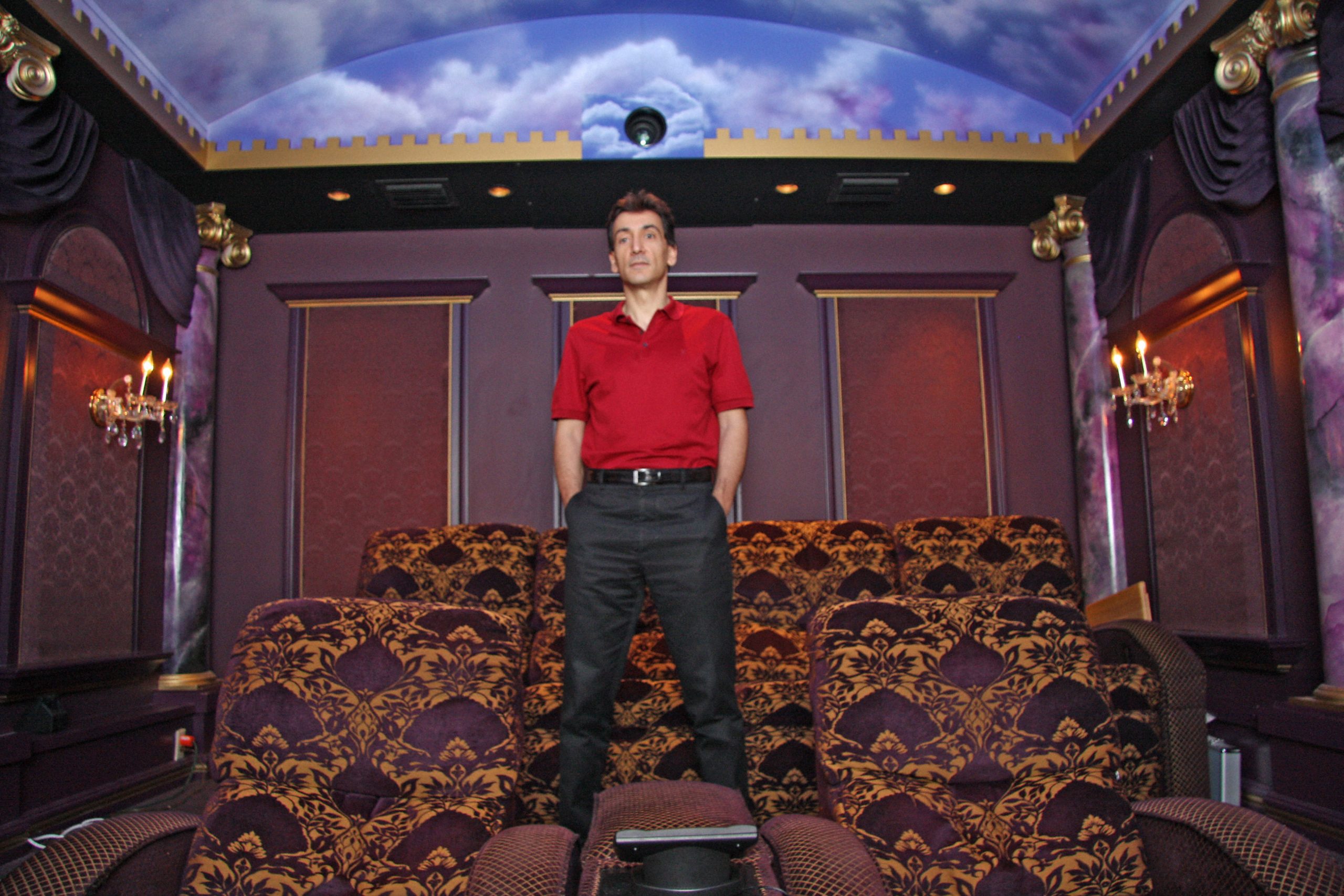
That is the role I played for Paul Stanley. I was chief consultant and overall system architect on behalf of Paul Stanley for his state of the art theater, with CinemaTech creating the interiors and setting. The full story of the room is in Inside Paul Stanley’s Private Cinema, and Paul’s note to me afterward said it simply: “Thank you David, you made it sound great!”
2. The Room Comes Before the Equipment
The most common mistake I see is a room designed around a shopping list. In the best private cinemas, the room is designed first and the equipment is chosen to suit it. That means:
- A quiet room. Isolation from the rest of the house and a low noise floor from air handling, so the quiet passages of a film or a record are actually quiet.
- Geometry that serves the seats. Screen size, seating rows and sightlines planned together, so every seat sees the whole image and hears a balanced soundfield.
- Acoustics built into the interiors. Treatment designed with the interior designer from the start, so the room looks elegant and measures well at the same time.
- Infrastructure for the future. Conduit, power, cooling and equipment space planned for the next generation of sources and processors, not only today’s.
When the room is right, every component performs closer to its potential. When it is wrong, no amount of equipment fixes it.
3. The Picture and Sound Chain Is Matched End to End
The best rooms treat picture and sound as chains, with every link chosen for the others. In our own reference theater the picture chain is a Kaleidescape Strato K for the source, a madVR Envy Extreme MKIII for processing and a Barco Heimdall CS for projection. I explain why each link matters in Inside the Frangioni Media Reference Theater. The specific brands will differ from room to room. The principle does not: the source, the processor, the display and the screen are selected and set up as one system.
Sound works the same way. Loudspeakers, amplification, surround processing and bass management are designed for the room’s size and seating, then integrated with the acoustic design. Dolby Atmos layouts belong to that plan from the beginning, so overhead speakers land where they should rather than where the ceiling happens to allow.
4. Music Is Treated as Seriously as Movies
This is where my background shapes every room. I mixed the first 5.1 DTS surround music CD in 1995, and I created the Dolby Atmos and 5.1 surround mixes of KISS Rock And Roll Over for its 50th anniversary box set. A room that plays music accurately has smooth bass across the seats, controlled reflections and loudspeakers that stay clean at high levels. Those same qualities make dialogue clear and effects land with impact.
Many of the owners I work with are musicians or serious listeners, and they use the theater as their main listening room. The best rooms let them play a stereo record with real width and depth, then switch to a full Dolby Atmos film without compromise. If you are weighing formats, our guide to what surround sound numbers mean is a good starting point.
5. Calibration Happens at Every Seat, and Again Later
World-class rooms are measured and tuned at the seats, not just at one sweet spot. Picture calibration sets brightness, color and tone mapping for the actual screen and room light. Audio calibration aligns levels, timing and bass response across the seating area. The step that separates the best rooms is that this is repeated: after the room has settled, after furniture or finishes change, and when new sources or processors arrive. A private cinema is a living system, and it should be looked after like one.
6. Operation Disappears
The owner of a great private theater should never troubleshoot it. One command brings up the source, processing, projection, audio and lighting in the right order, and one command shuts it down. Control systems from makers such as Crestron, Control4 and Lutron make that possible, but the design work is in deciding what the owner should see and what should stay hidden. Paul Stanley told madVR Labs he is “not a tech nerd,” and that is exactly the standard: reference performance with nothing for the owner to manage.
What This Means If You Are Planning a Room
If you are building or rebuilding a private cinema, the most valuable decision you can make is to bring in the system architect early, before the room is framed and before the equipment list exists. That is when the room, the chain and the control can still be designed together. You can see how we approach these projects on our luxury home theater design page, and the consulting side of my role for Paul Stanley is on my personal site in Paul Stanley’s Home Theater: My Role as Chief Consultant and System Architect.
FAQ
What do the best private home theaters have in common?
One system architect responsible for the whole result, a room designed before the equipment, a picture and sound chain matched end to end, calibration at every seat, music performance equal to movies, and simple one-command operation.
Who designs the best private home theaters?
The strongest rooms are led by a system architect working on the owner’s behalf alongside the architect, interior designer and acoustician. David Frangioni of Frangioni Media served as chief consultant and overall system architect for Paul Stanley’s theater and designs private cinemas in Florida, New York, Beverly Hills and around the world.
What equipment is in a reference private cinema?
It varies by room, but the Frangioni Media reference theater uses a Kaleidescape Strato K source, a madVR Envy Extreme MKIII video processor and a Barco Heimdall CS projector, chosen and set up as one chain.
Should a private home theater also be a music room?
Yes. A room that plays music accurately has smooth bass, controlled reflections and clean loudspeakers at high levels, and those qualities make films sound better too.
More from David Frangioni: Paul Stanley’s Home Theater: My Role as Chief Consultant and System Architect, the consulting side of the project.
If you are planning a private cinema and want it to perform at this level, start a private conversation with me here.
Join The Signal Chain
My monthly letter on how music is played, captured, mixed, heard and preserved.
One letter a month from David Frangioni. Unsubscribe anytime.
Welcome to The Signal Chain.
Thank you for signing up. You are now part of my community of artists, drummers, engineers and music lovers who care about how great music is made, heard and preserved.
My next letter comes straight to your inbox. If you do not see it, check your promotions or spam folder and mark it as safe.
David Frangioni