
Designing a Team Production Facility: The Rooms, Systems and Workflow a Pro Franchise Needs
The Team Studio Series | Part 2 of 4 | Frangioni Media
By David Frangioni | Frangioni Media | Header image: concept rendering for illustration.
One building, every format: fast-turn social, live programming, documentary and scripted work, all season long. Here are the rooms and systems a professional team’s facility needs.
The Short Answer
A professional team’s production facility has to do something most studios never attempt: produce fast-turn social content, live and broadcast programming, long-form documentary and, increasingly, scripted and feature work, all from the same building, all season long.
That requires rooms designed for their purpose, systems that share media instantly and a workflow that lets small teams move quickly without lowering the standard. Frangioni Media designs and delivers the entire facility, turnkey.
Why the Bar Has Moved
The Cubs shot their TikTok series “Nine Innings to Love” with the team’s in-house production group, sometimes during live games, according to Front Office Sports. The Chiefs run an in-house production arm, 65 Toss Power Trap Production, alongside a separate entertainment studio. Content that used to be outsourced is now being made in-house, and audiences compare it to everything else on their screens.
The Core Rooms
| Space | What it does | What we design for |
|---|---|---|
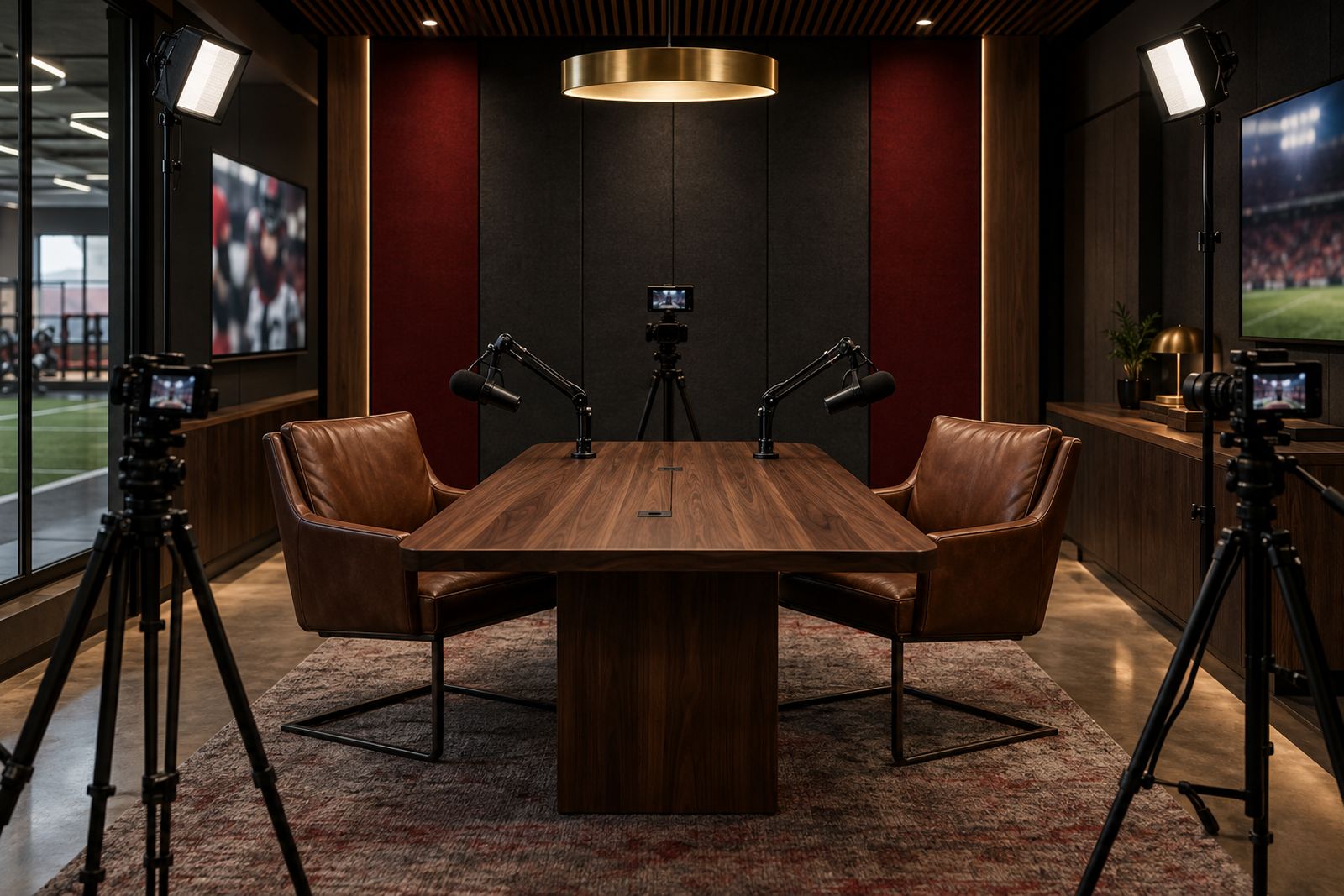
| Stage and set | Interviews, shows, branded content, scripted scenes | Isolation, low noise floor, lighting grid and power, flexible sets, camera sight lines |
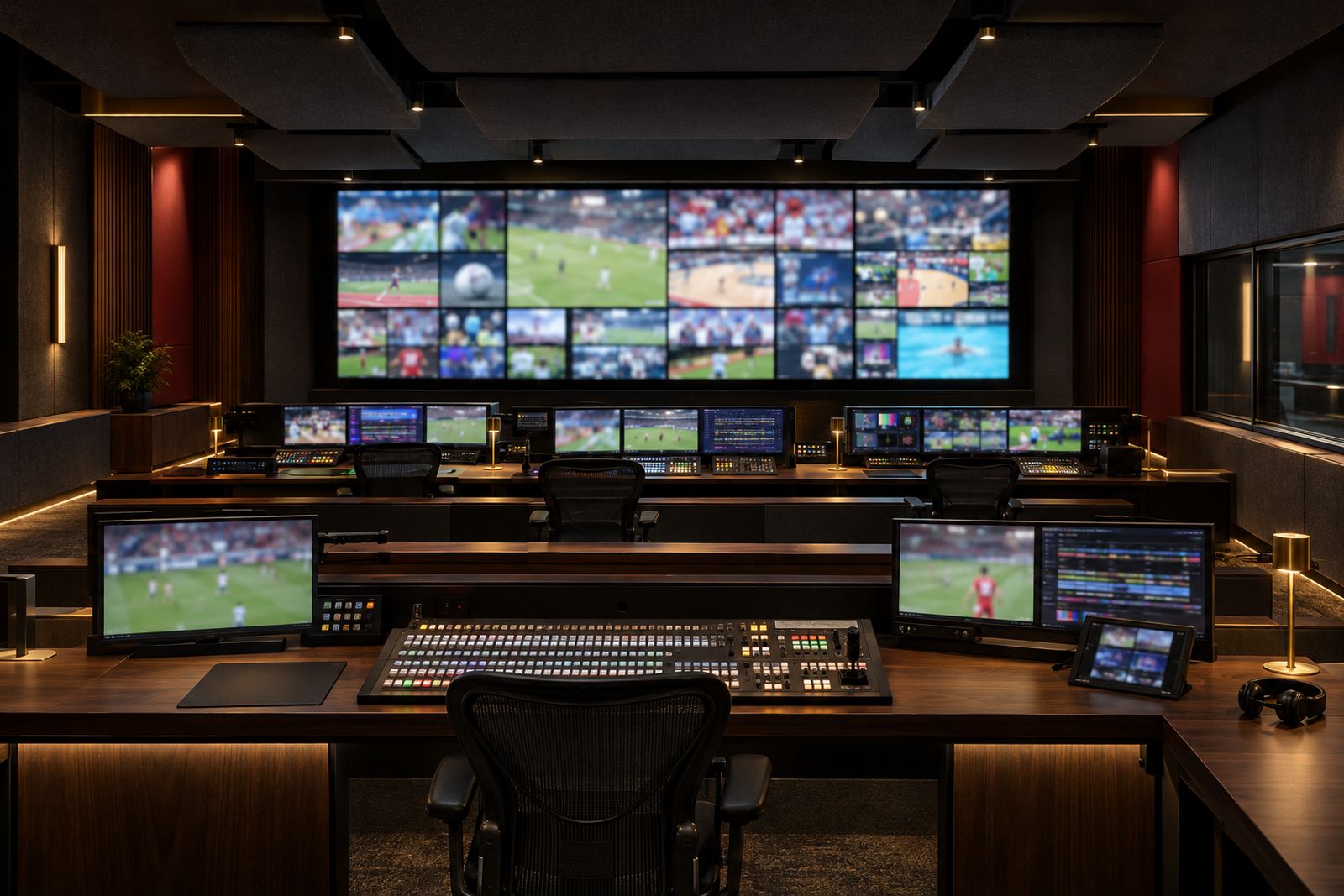
| Production control room | Live shows, streams, multi-camera recording | Switching, replay, graphics, comms, monitoring and ergonomics for long shifts |
| Edit and color suites | Social, episodic, documentary and feature post | Accurate displays, controlled light, shared storage performance, quiet |
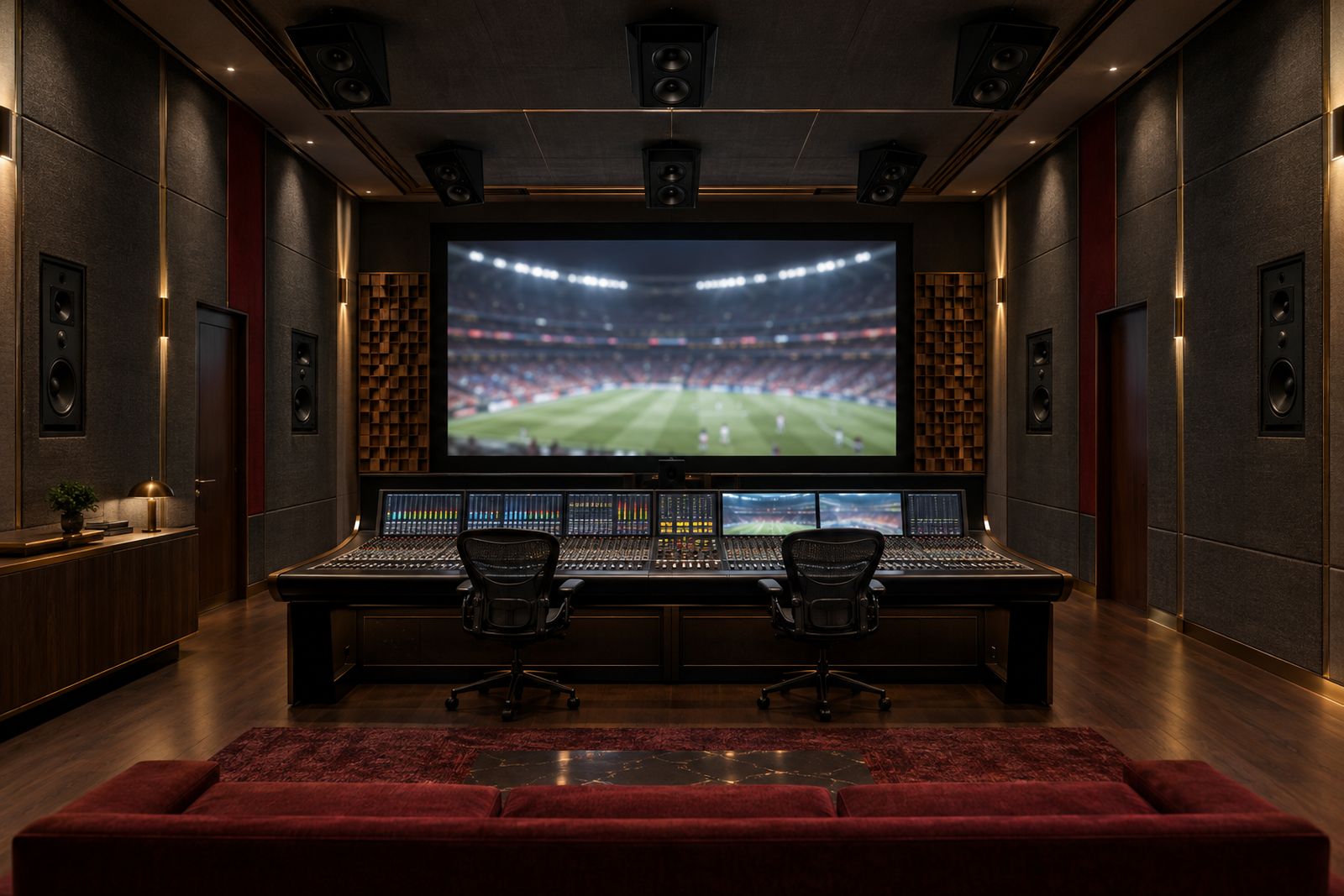
| Dolby Atmos mix room | Immersive and stereo mixing for streaming, broadcast and film | Speaker layout, acoustics, calibration and delivery to current specs |
| Podcast and talent studios | Player, coach and broadcaster content | Voice isolation, camera-ready lighting, simple one-button operation |
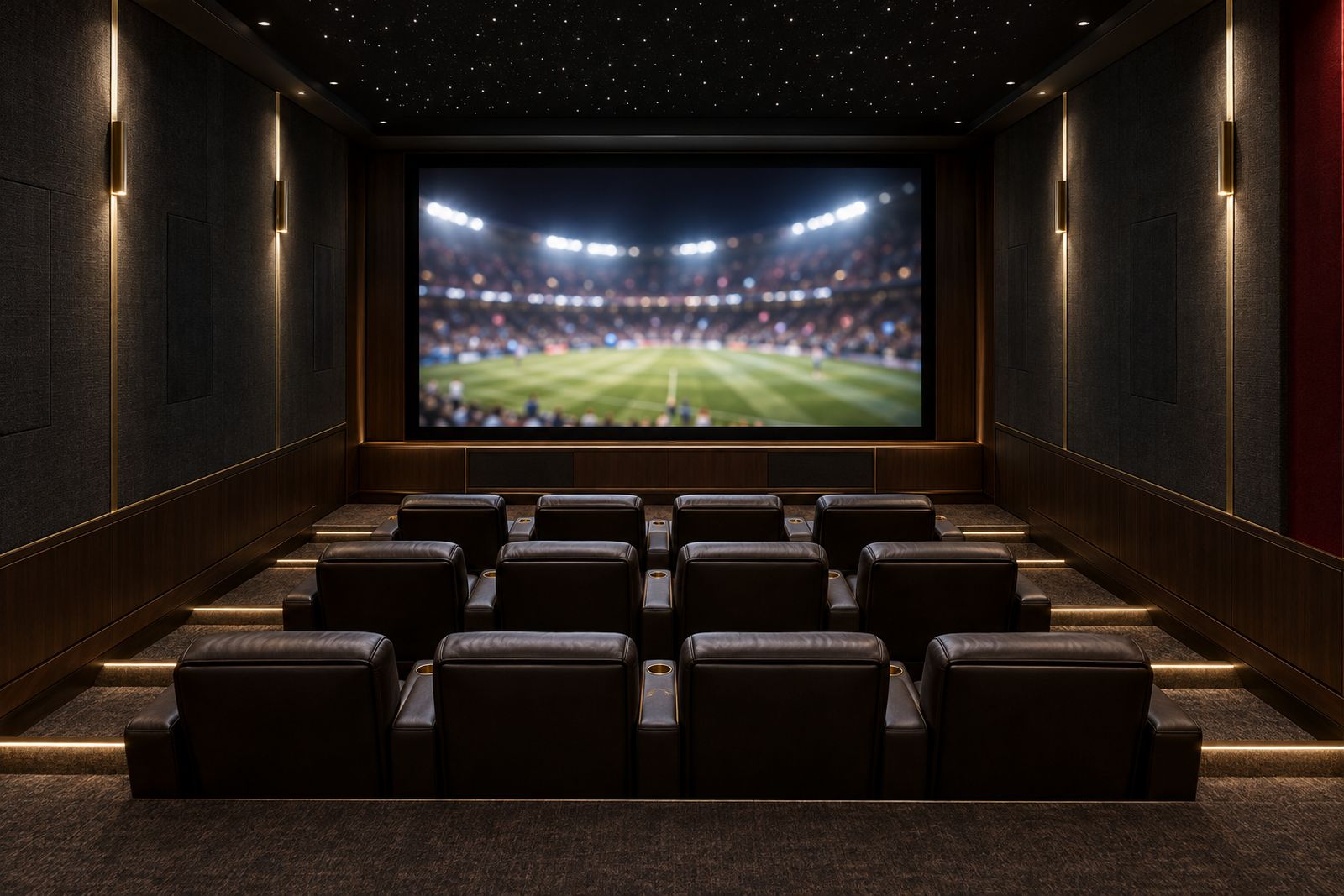
| Screening room | Reviews, approvals, partner and sponsor presentations | Reference picture and sound so decisions are made on what the audience will see |
| Machine room and storage | Media servers, networking, archive | Bandwidth, redundancy, cooling, power and growth |

Acoustics Come First
Picture problems are visible. Sound problems are felt, and they quietly lower the quality of everything. Most converted spaces in stadiums and team offices were never designed for recording: HVAC noise, crowd and event noise, reflective glass and thin walls.
We design isolation and treatment around the actual uses of each room. The approach is the same one we use for professional recording studios: measure, model, design, build, then verify.
Immersive Audio Is a Deliverable, Not an Extra
Streaming platforms and premium distributors increasingly expect immersive audio. A docuseries or film produced by a team studio will compete with work mixed in Dolby Atmos. I have mixed and produced immersive audio for music and media, and a team facility should be able to deliver that in-house rather than send every project out.
Design for the Workflow
The fastest facilities are designed around how media moves. Footage from a game, a practice or a stage shoot should land in shared storage, be logged, edited, mixed, approved and delivered without being copied across drives or carried between floors.
That workflow determines network design, storage capacity, room adjacencies and even where the doors go. Part 3 of this series covers the content engine in detail.
Build in Phases
Not every team needs a full studio on day one. We often recommend a phased plan: start with the rooms that produce the most content, specify the infrastructure for the full build and add stages, mix rooms or screening rooms as the slate grows. That protects the budget without boxing in the future. Part 4 covers turnkey delivery and cost control.
For the perspective behind this approach, read what building studios for legendary artists taught me about building them for teams.
Plan Your Facility
Whether you are converting existing space inside a stadium or training complex or building a dedicated studio, contact Frangioni Media. One call starts the plan.
Frequently Asked Questions
What rooms does a sports team production facility need?
Typically a stage and set, production control room, edit and color suites, a Dolby Atmos mix room, podcast and talent studios, a screening room and a machine room with shared storage and archive.
Can existing stadium or training-facility space be converted?
Often, yes. Frangioni Media evaluates existing space for isolation, noise, power and adjacency before recommending new construction.
Do team studios need Dolby Atmos?
Premium streaming, documentary and film deliverables increasingly expect immersive audio. Designing for it from the start avoids sending every project out.
One call. One accountable lead.
Plan a facility that produces at broadcast and cinema quality.
Stadium conversion or dedicated build, Frangioni Media designs and delivers it turnkey.
The Team Studio Series
- Part 1: Building the production company
- Part 2: Designing the facility (you are here)
- Part 3: The content engine
- Part 4: Turnkey, done once
David Frangioni